


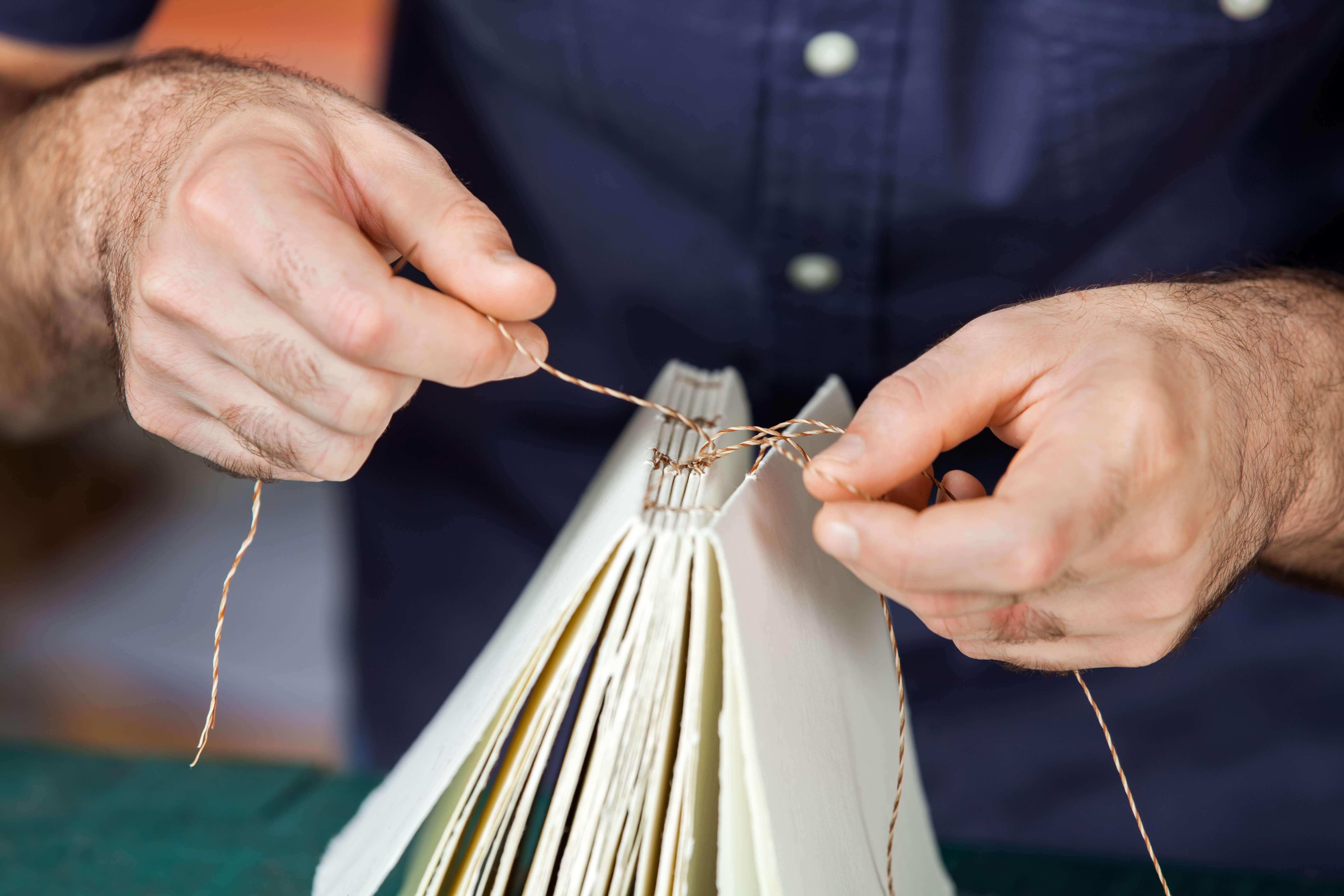
Types of books
Need advice on the different types of books?
Types of books
Optima offers three different types of books/covers: paperbacks (softcover), hardcovers (hardbound) and flexibound books. Theses and dissertations are usually printed as paperbacks, because less processing time is required than for a hardcover and it is less expensive. The majority of paperbacks are printed on card (wood-free sulphate board), somewhere between 240 and 260-gram paper.
Printing your dissertation or thesis as a special hardcover edition is a wonderful reminder of one of the most important achievements of your life. Remember that a hardcover is slightly more expensive and that additional working days are required to process this in comparison to a paperback. In addition, the cover of a hardcover has different dimensions to the cover of a paperback. If you are interested in a hardcover edition of your dissertation or thesis, please contact one of Optima’s staff members.
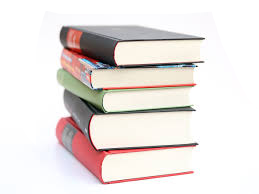
Types of books
-
Paperback
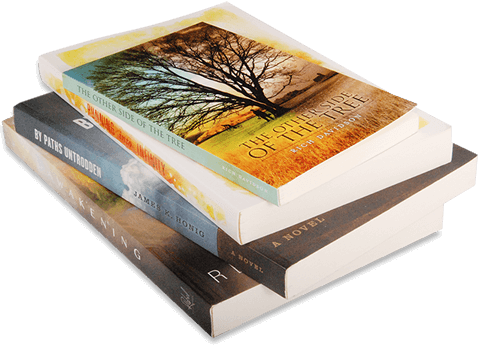
Paperback (softcover)
The book would have a 'floppy’, flexible cover and the pages are glued to that cover. This method of book binding is considerably cheaper and it is therefore widely used for books produced in large print runs. Although there is an appropriate Dutch word for this method of binding, the English term ‘paperback’ is often used.
-
Flexibound book
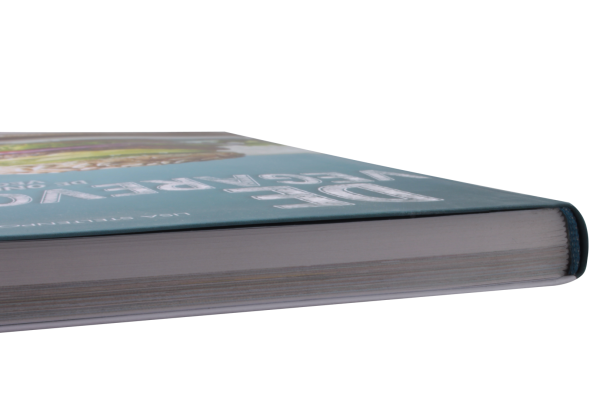
Flexibound book
We are one of the few bookbinders in the Netherlands to still produce flexibound books. A flexibound book combines elements of bound books (durability, flexible spine and overhang) with those of softbound books (no greybord). The result is a bound book with a flexible cover of 220-260 grams sulphate board.
-
Hardbound
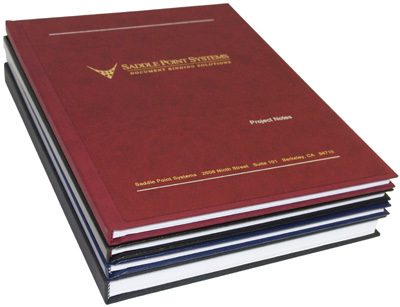
Hardbound (hardcover/hardbound)
This is the original method of binding books. This type of binding results in a book with hard binding, comprising a front cover, a back cover and a spine. Between the front and back covers are the joints, which act as hinges. The spine is not attached directly to the book block, so a space is visible between the book block and spine when the book has been opened. This space allows a bound book to remain open.


