


Binding methods
Get your books bound on the heart
Binding methods
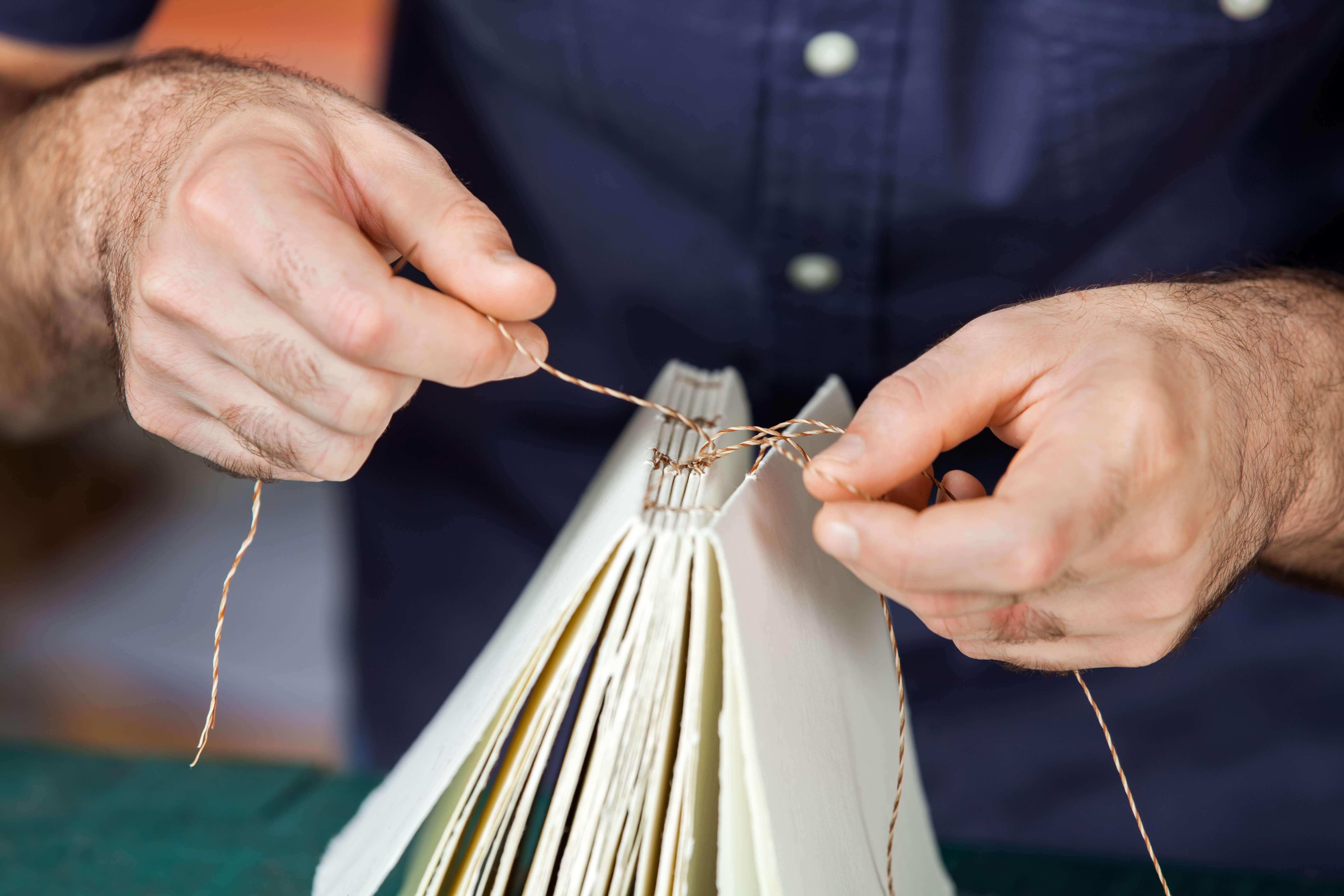
The two most common methods of binding a book are sewn binding or perfect binding. Nowadays, perfect binding is almost as strong as sewn binding. The advantage of sewn binding is that a book opens more easily and remains flat. Sewn binding is more expensive and production takes a little longer. Perfect binding is the technique most commonly used for the books we produce. We would love to tell you more about our techniques.
Types of binding method
-
Glued
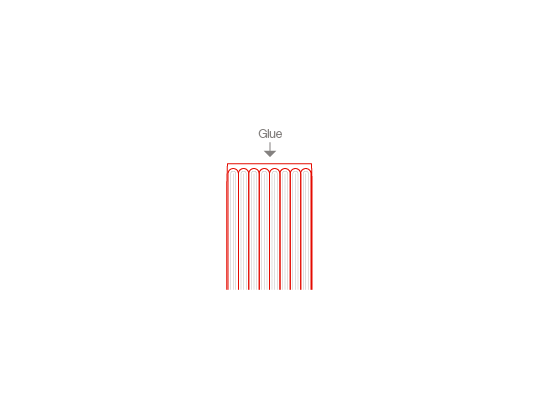
Perfect binding
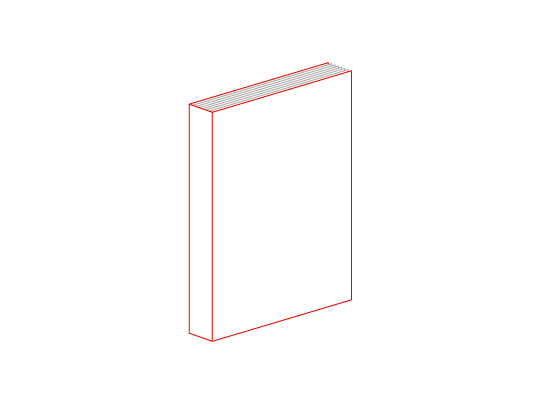
At Optima we usually opt for perfect binding. This is the most common method for binding dissertations or theses. In recent years, the quality of perfect binding has improved significantly. It is durable and will withstand intensive use.
-
Sewn
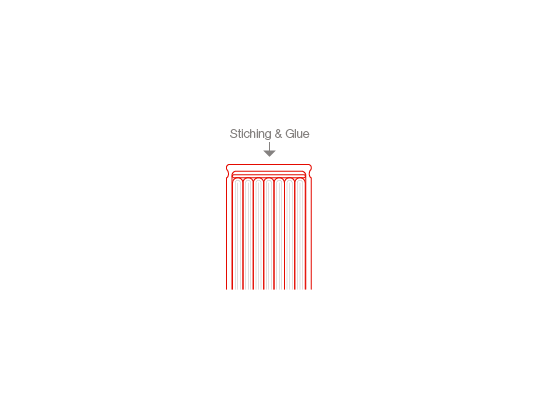
Sewn binding
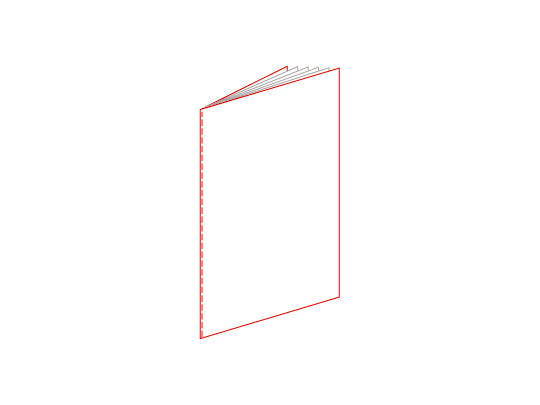
Sewn binding is a binding technique that isn’t often chosen for a thesis or dissertation. In this technique, quires are needed to bind books. In printed matter, that isn’t a problem, as this involves folded pages and, therefore, by default quires. But printing involves loose pages and a quire has to be made by inserting the loose pages. This is tedious, time-consuming and expensive.
-
PUR
PUR binding (glued)
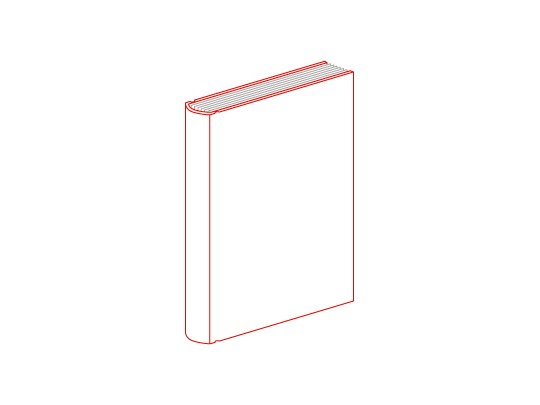
With PUR gluing, the same technique is used as the one used for perfect binding. The pages are squared off and glued. This technique is fast, results in a nice flat spine and is a cheaper alternative to perfect binding. This technique is widely used for schoolbooks. This is also a durable method of binding, but the internal pages will be slightly less flexible than when the sewn binding technique is used. PUR is mainly used for coated paper and slightly heavier paper.
- PUR binding
- Grey parts
- Vibrant colors


